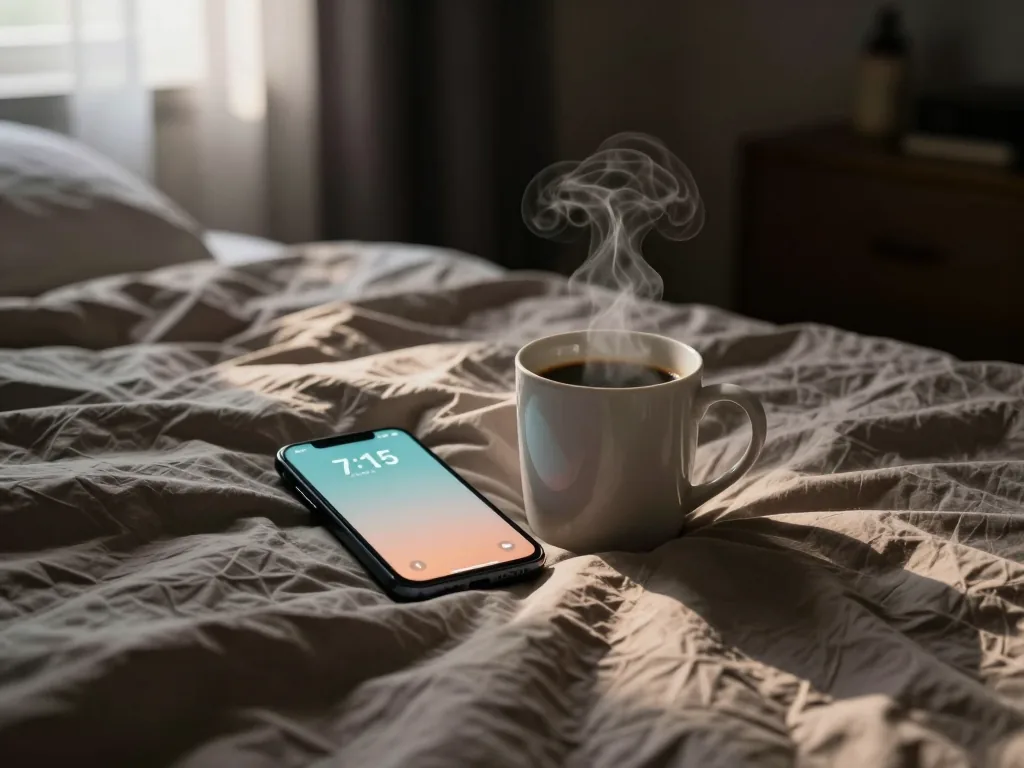
The blaring alarm, the frantic coffee grab, the wince at the sun—if that’s your 7 a.m., you’re not lazy, just wired differently. Forcing a “5 AM miracle morning” on a night owl breeds burnout, not productivity. Consider this your permission slip to ditch hustle-culture wake-ups and ease in slower. Below are twelve gentle, science-backed rituals that skip the toxic positivity entirely. Think five-minute stretches in bed or sound-scaping your first sip of tea. It’s a low-pressure toolkit that turns mornings from a battleground into a sanctuary—even if you’ve hit snooze three times first.
Why Traditional Morning Routines Fail You
Most morning-optimization advice you’ve ever read was written by someone who wakes up at 5:30 AM, already hydrated, meditated, and genuinely excited about cold plunges. That advice assumes you’re starting from a baseline of full rest and intrinsic motivation. But if you’re not a morning person, your circadian rhythm is naturally delayed—your internal clock peaks later in the day, which means your body is literally not designed to perform a HIIT workout at dawn. Forcing a 5 AM routine before you’ve had seven hours of sleep is biologically counterproductive; it spikes cortisol at the wrong time, deepens your sleep debt, and sets you up for a day of guilt and exhaustion. The first step, then, is radical acceptance: your “gentle” morning will not look like a productivity influencer’s. It will be slower, darker, and far more forgiving. That’s not a failure—that’s the point.
The Sleep Debt Prerequisite
You cannot out-routine a sleep deficit. The CDC’s 2026 guidelines still require 7+ hours nightly, and the National Sleep Foundation’s 7–9 hour range remains unchanged—no amount of sunrise alarms or journaling will fix a body running on fumes. Before you tweak a single morning habit, fix your bedtime. Consistent sleep and wake times, even on weekends, are the single strongest circadian anchor we have, according to the American Academy of Sleep Medicine. This isn’t glamorous, but it’s non-negotiable.
“A gentle morning is not a substitute for a full night’s sleep—it’s a reward for one.”
Why Willpower Is Overrated
The second reason traditional routines fail you is that they rely on willpower—and willpower is at its absolute lowest in the first ten minutes after waking. Your prefrontal cortex is still warming up; decision-making is cognitively expensive. So stop deciding. Design for friction reduction: lay out your clothes the night before, pre-measure your coffee grounds into the filter, and place a bright light lamp directly next to your bed so you can switch it on without sitting up. The goal is to make the first ten minutes require zero decisions. You’re not building a routine; you’re building a ramp. And ramps work even when you’re half-asleep.
The First Five Minutes After the Alarm
How you react to the alarm shapes the next hour. If you’re a chronic snoozer, your instinct is to grab the phone, swipe away the noise, and fall into notifications—but that spikes cortisol before your feet hit the floor. A better move? Try a “snooze alternative”: put your alarm across the room so you must stand to silence it, and pair that forced motion with a physical anchor—a glass of water waiting on your nightstand. You’re not fighting your biology; you’re steering it into one small, doable action.
The 90-Second Reset
Once you sit up, don’t swing your legs out right away. Instead, stretch slowly: roll your shoulders back, tilt your neck gently side to side, and take three deep exhales that last longer than your inhales. This cues your parasympathetic nervous system to ease into wakefulness, not jolt into fight-or-flight. The aim is a lower heart rate before the day begins, not after. Try this sequence:
- Keep your eyes closed for the first 30 seconds after sitting up—no visual input, just breath.
- Place both feet flat on the floor before standing; grounding through your soles tells your brain it’s “safe to move.”
- Drink 2–3 sips of water before touching your phone; it starts rehydrating your brain and gives your hands a neutral task.
The Light Switch Rule
Light within the first hour is your strongest circadian cue. The 2026 research still holds: you need 10,000 lux for 20–30 minutes—natural daylight or a bright light lamp—to suppress melatonin gradually, not abruptly. So open your curtains immediately, even if you’re still lying down. If your room faces a dark courtyard or you wake before sunrise, keep a 10,000-lux lamp on your nightstand and switch it on before sitting up. Don’t stare at it; just let it fill your peripheral vision. The key is gradual suppression: your body should feel the light gently fade the sleep hormone, not slam it off. Done consistently, your 7:00 a.m. alarm will start feeling less like a fire drill and more like a dimmer knob you control. And if you still need to check your phone after the water and stretch? Fine—but by then, your nervous system is already reset, so notifications won’t hijack your morning. The first five minutes aren’t about productivity; they’re about being present enough to choose how you wake.
Hydration and Fuel Without the Fuss
Overnight, your body loses a surprising amount of water—through breath, sweat, and basic cellular maintenance—and even mild dehydration can amplify that thick, foggy feeling in your head. The National Academies still set adequate intake at 2.7 liters per day for women and 3.7 liters for men, but that includes water from food like fruits, soups, and even your morning oatmeal. So you don’t need a gallon jug beside your bed. You just need a consistent, low-effort start.
The “One Glass” Minimum
Tonight, before you sleep, fill a glass or reusable bottle and place it directly on your nightstand—within arm’s reach of where you actually wake up. The goal is absurdly simple: drink it within the first 15 minutes of consciousness. Don’t get out of bed first. Don’t check your phone first. Just roll over and sip. If plain water feels boring or slightly nauseating, squeeze in a wedge of lemon or add a tiny pinch of salt for electrolytes. Skip sugary sports drinks entirely—they’ll spike your blood sugar and leave you crashing harder by mid-morning. A few practical tricks make this stick:
- Room-temperature water goes down much faster than ice-cold, which can shock your system and make you sip slowly.
- Pair your hydration with light exposure—sit by a window while you drink, or open the blinds first thing. Light tells your brain to suppress melatonin, and water tells your body it’s safe to wake up.
- If you keep forgetting, stick a bright Post-it note on your alarm clock or phone charger that says “DRINK” in big letters. It sounds silly, but it works.
Caffeine Timing That Protects Sleep
Caffeine has a half-life of five to six hours, meaning half of it is still in your system hours after your last sip. In 2026, sleep experts still unanimously advise avoiding caffeine within eight to ten hours of bedtime. For a 7 AM wake-up, that means your last coffee should land around 1–2 PM—not 4 PM, not “just a small one” at 5. If you’re a serial snoozer, this is the single most effective change you can make to actually feel rested the next morning. But there’s also a gentler nuance: in the morning, try delaying your first cup by 60 to 90 minutes after waking. Your body naturally produces cortisol in the first hour to help you alert up; caffeine immediately after waking can blunt that natural rise and then dump you into an energy crash by 10 AM. This isn’t a rigid rule—just a gentle experiment. If you usually wake at 7, aim for your first sip at 8 or 8:30, and see if your 11 AM slump disappears.
Micro-Movement That Doesn’t Feel Like Exercise
The 2026 Physical Activity Guidelines still recommend 150 minutes of moderate activity weekly, but they explicitly allow breaking it into 5–10 minute sessions. The WHO’s 2026 guidelines reinforce that any movement is better than none—so a 5-minute stretch counts. For snoozers, the trick isn’t to find time to exercise; it’s to hide movement inside rituals you already do.
The “Toothbrush Squat” and Other Sneaky Moves
Incorporate movement into existing habits: do 10 calf raises while brushing your teeth, or 5 slow squats while waiting for your coffee to brew. This avoids the mental barrier of “working out.” You’re not exercising—you’re just brushing your teeth with better posture. Other low-effort options include:
- 3 minutes of gentle yoga (child’s pose, cat-cow) on the floor
- A 5-minute walk to the mailbox or around the block
- Shoulder rolls and neck tilts while standing at the kitchen counter
These micro-moments add up without triggering the dread of a full workout. The key is to keep them short, slow, and attached to something you’d do anyway.
Why 5 Minutes Beats 30
Morning cortisol is naturally higher, so intense exercise can feel punishing. Gentle movement—stretching, walking, or yoga—releases tension without spiking stress hormones. The goal is to feel awake, not exhausted. If you have energy later, great; if not, you’ve already met the “any movement” bar. In 2026, the science is clear: consistency beats intensity for non-morning people. A 5-minute routine every day outperforms a 30-minute sweat session you skip twice a week. So keep it easy, keep it attached to a habit, and let your body wake up on its own terms. You don’t have to love mornings—you just have to move a little.
The “No-Phone” Buffer Zone
For anyone who dreads mornings, hitting snooze isn’t the first mistake. Reaching for your phone is. That glowing rectangle becomes a vortex of other people’s urgency. Checking emails or social media within the first 30 minutes hijacks your prefrontal cortex, flooding you with cortisol before your feet touch the floor. It triggers comparison anxiety, work stress, and low-grade panic that sets the day’s tone. Instead, create a 10-minute buffer of neutral, low-stimulation activity. This isn’t about discipline. It’s about protecting your brain’s warm-up period from external demands.
Analog Alternatives to Scrolling
Keep a physical book, crossword puzzle, or journal next to your bed. The goal: let your brain warm up without external input. A paperback novel, sudoku book, or sketchpad works. You’re not seeking productivity—just a gentle cognitive stretch. As one sleep researcher put it: “The first 10 minutes of your day belong to you, not to the algorithm.” If you journal, try a single sentence about how you actually feel, not what you need to do.
The “One Notification” Rule
If you absolutely must check your phone—say, to see if a meeting moved or a storm is coming—set a strict rule: open only your calendar and weather app. No email. No social media. No news. Nothing requiring a decision or emotional reaction. After 10 minutes, you can engage with the world—but by then, your nervous system is grounded. You’ll approach notifications with curiosity rather than reactivity. This small boundary transforms your morning from a scramble into a choice.
Building a Flexible Routine That Adapts to Your Life
A rigid routine is fragile. Some days you’ll have five minutes; others, thirty. The trick to sustainability is designing a “menu” of options you can choose from based on your energy and time that morning. Think of it like ordering from a café: you always get the base, then add extras when you have more room.
Start with the 5-minute version: as soon as your feet hit the floor, get direct light exposure—open the curtains or step outside for sixty seconds—drink a full glass of water, and do a two-minute full-body stretch (neck rolls, shoulder shrugs, forward fold). That’s it. The 15-minute version adds a short walk around the block (ten minutes) and one page of stream-of-consciousness journaling. The 30-minute version builds in a full yoga flow (twenty minutes) and a breakfast eaten without screens—just you, your food, and the morning light.
The Weekend Exception
The American Academy of Sleep Medicine recommends consistent sleep and wake times even on weekends, but “consistent” doesn’t mean identical. Allow a thirty-to-sixty-minute shift on weekends to catch up on social sleep debt, but avoid sleeping in by three hours—that resets your circadian clock and makes Monday mornings brutal. So if you wake at 6:30 AM on weekdays, let yourself sleep until 7:30 AM on Saturday, not 9:30 AM. That one-hour grace period is enough to feel rested without derailing your rhythm.
When Life Interrupts
If you miss your routine entirely, don’t double down with guilt. Just get light exposure and water, then move on. Perfectionism is the enemy of sustainability. Here’s how to handle common disruptions:
- Travel: Pack a small light lamp (€20 to €50) and a reusable water bottle. Even a one-minute light session in a hotel room counts.
- Sick days: Skip movement entirely. Keep hydration and light exposure, but let your body rest.
- High-stress weeks: Reduce to the 5-minute version without shame. A simple stretch and a glass of water is still a win.
The goal isn’t to perform a perfect ritual every morning. It’s to have a flexible system that bends with your life, so you never have to start from zero.
Advanced Strategies for Deep Night Owls
If your natural peak is after 10 PM, you are a true night owl, and most standard morning advice will still feel like torture in 2026. The good news is that you can shift your entire schedule later—but only if your job and life allow it. The key is to anchor your wake time to your natural rhythm, not society’s default. Stop fighting your biology; work with it.
Chronotype-Aligned Scheduling
If you wake at 9 AM instead of 6 AM, that is perfectly fine—just keep it consistent. Your body craves regularity, not early rising. Light exposure should happen within the first hour of your wake time, not a universal hour. In 2026, a 10,000 lux therapy lamp is even more critical if you wake after sunrise in winter, when natural light is scarce. Place it on your nightstand or desk, and use it for 20 to 30 minutes after you open your eyes. Expect to pay from €40 to €120 per lamp for a reliable, full-spectrum model. Do not skip this; your circadian rhythm depends on it.
The “Two-Phase” Wake-Up
For extreme snoozers, a single alarm often fails because the transition from deep sleep to full consciousness is too abrupt. Instead, try waking 30 minutes earlier than your final alarm, but stay in bed with your eyes closed and a dim, warm light on (around 5 to 10 lux, similar to a dawn simulator). This mimics a natural sunrise and allows your brain to begin the waking process slowly. After 30 minutes, your final alarm goes off, and you are already semi-alert. This is not a hack; it is a gentler transition. You are not cheating yourself out of sleep—you are giving your nervous system a runway. For a quality dawn-simulating alarm clock, budget from €60 to €200 per unit. The result is a smoother morning, even for the deepest of night owls.
Tracking Progress Without Obsessing
You don’t need a wearable, a sleep-score app, or a morning journal to know if your routine is working. The fastest way to kill a gentle morning habit? Turn it into a data-entry job. Instead, track just two simple metrics: your energy level at 10 AM on a scale of 1 (comatose) to 10 (bouncing off the walls), and the severity of your afternoon crash (mild, moderate, or face-down-on-desk). That’s it. If both numbers improve—or even just one—over a two-week stretch, your routine is doing its job. You don’t need to analyze sleep cycles or heart-rate variability. You just need to notice whether you feel less like a zombie by mid-morning.
The 14-Day Experiment
Pick one 10-minute routine—maybe the three-step stretch from earlier, or a slow cup of tea in silence—and commit to it for exactly 14 days. Don’t change your bedtime, caffeine timing, or anything else. At the end of two weeks, ask yourself one question: Do I feel less dread when the alarm goes off? If yes, keep the routine and let it settle in. If no, swap just one element. Replace stretching with a slow walk around the block, or swap the tea for a glass of water with lemon. You aren’t overhauling your life. You’re fine-tuning a single lever.
“Consistency beats intensity when you’re building a habit you actually want to keep.”
When to See a Professional
If you’ve tried consistent sleep times, morning light exposure, and proper hydration for a full month—and still wake up feeling genuinely exhausted, groggy, or unable to function—please see a sleep specialist. Persistent morning fatigue can signal underlying issues like sleep apnea, thyroid dysfunction, or vitamin deficiencies. A full sleep study in 2026 typically ranges from €300 to €1,200 per session, depending on your location and whether it’s at-home or in-clinic. It isn’t cheap, but it’s far cheaper than years of dragging yourself through mornings you cannot fix with a routine alone.