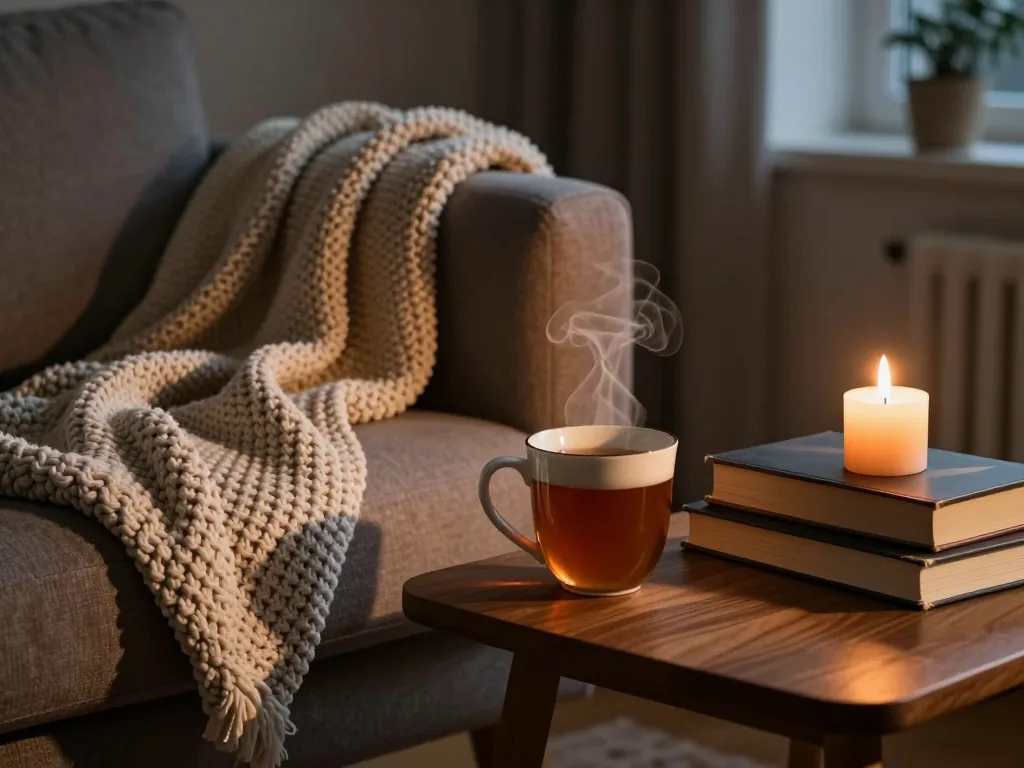
Digital Detox vs Analog Comfort—which screen-free evening routine wins for your lifestyle? There’s no single verdict, only a trade-off. One demands structure; the other leans into ease. This guide pits them against each other on three fronts: effort, emotional payoff, and how well each bends to your schedule. You’ll see precisely where each routine excels, where it stumbles, and who it suits best—so you can craft an evening ritual that holds without squeezing into a one-size-fits-all box. By the end, you’ll have a clear decision framework, not a recycled checklist of tips.
Effort Required
- Digital Detox asks for planning: set a hard cutoff time, prep activities in advance, and resist the pull of notifications. It’s a deliberate, sometimes taxing commitment.
- Analog Comfort demands little—grab a book, brew tea, or doodle. No prep, no rules, just spontaneous ease.
Who wins: If you thrive on clear boundaries and can invest upfront energy, Digital Detox fits. If your days drain you and you crave low-lift unwinding, Analog Comfort is your match.
Emotional Payoff
- Digital Detox delivers a sense of accomplishment—you’ve conquered the screen, reclaimed hours, and feel mentally sharper. But it can feel clinical if overdone.
- Analog Comfort offers warmth and nostalgia—a soft landing that soothes anxiety without performance pressure. The trade-off? Less structure can leave you restless if you’re prone to wandering thoughts.
Who wins: Need a morale boost and measurable control? Choose Digital Detox. Seeking gentle relief and emotional coziness? Analog Comfort takes it.
Adaptability to Your Schedule
- Digital Detox thrives on consistency—same time nightly, which suits predictable routines but crumbles with erratic hours.
- Analog Comfort flexes—it fits a 20-minute window or a lazy evening, adapting to chaos without losing its essence.
Who wins: Fixed 9-to-5ers and planners will harness Digital Detox’s rhythm. Shift workers or busy parents should lean into Analog Comfort’s flexibility.
The Verdict
Neither routine is universally superior; they solve different problems. Digital Detox appeals to the disciplined, goal-oriented mind. Analog Comfort welcomes the weary, spontaneous soul. Match the choice to your energy, not trends—and you’ll build a ritual that sticks.
What Does a Screen-Free Evening Routine Actually Look Like
A screen-free evening routine isn’t about going full hermit or tossing your phone in the river—it’s a deliberate swap of glowing rectangles for tactile, low-stimulation rituals that signal your brain to wind down. Think of it as a series of small, repeatable choices that replace the endless scroll with something you can hold, smell, or hear. The goal is not perfection but consistency, and the payoff is better sleep, calmer thoughts, and a sense that your evening actually belongs to you.
The Core Sequence of a Digital Detox Evening
The backbone of any successful screen-free evening is a fixed order of events, because your brain craves predictability. Start with a hard cutoff: set an alarm or use a physical timer to mark the moment all devices go into a drawer or a charging station outside the bedroom. From there, the sequence typically flows from high-energy to low-energy—first a physical reset (like a quick stretch or a warm shower), then a transitional chore (tidying the kitchen or laying out tomorrow’s clothes), and finally a quiet, absorptive activity that doesn’t require a backlit display.
Compare two common approaches: the “taper-down” method versus the “cold-stop” method. The taper-down method involves dimming screens, switching to grayscale, and reading a paper book for 30 minutes before shutting everything off—it’s gentler but easier to cheat, since the phone is still within reach. The cold-stop method, by contrast, is abrupt: at 9:00 PM, the phone goes in a drawer, no exceptions, and the first 10 minutes feel uncomfortable but quickly pass. The taper-down suits people who get anxious with sudden transitions, while the cold-stop works better for those who know they’ll cave if the device stays visible. Your core sequence should also include a consistent bedtime, because a fixed wake-up time matters more than the exact hour you sleep—but the routine itself is what makes that bedtime stick.
Analog Comfort Activities That Replace Screen Time
The hardest part of going screen-free isn’t the missing notifications—it’s the sudden void of passive entertainment. To fill that void, you need activities that engage your hands, eyes, or ears without demanding your constant attention. The best analog comforts share three traits: they have a physical component, they produce a tangible result or sensation, and they don’t require a learning curve that frustrates you after a long day.
- Low-effort, high-satisfaction options: folding laundry while listening to a vinyl record, brewing a caffeine-free herbal tea, or doing a 10-minute jigsaw puzzle.
- Hands-on crafts: knitting, sketching, or whittling—these are ideal if you need to keep your fingers busy but your mind wandering.
- Slow reading: a physical book or magazine, but not a dense textbook—choose something with short chapters or beautiful photography.
- Sensory rituals: a warm foot soak, lighting a scented candle, or applying a hand cream with a distinctive smell.
Now, compare this to the most common screen substitute: watching TV or a movie. That’s still a screen, so it fails the test. Instead, think of audio as your bridge—a podcast or an audiobook through a speaker (not headphones) counts as analog if you’re doing something with your hands. The real trade-off is between activities that are absorbing (like a good book) and those that are mindless (like sorting a deck of cards). Absorbing activities make time fly but require focus, while mindless ones let your brain decompress but risk boredom. If you’re someone who needs to think through a stressful workday, choose the absorbing option; if you’re physically exhausted, pick the mindless one. The key is to have at least two go-to activities ready, because one will inevitably feel wrong some nights.
How to Structure Your First Screen-Free Hour
Your first hour is the make-or-break window, because that’s when the withdrawal itch is strongest. Structure it in three 20-minute blocks, each with a distinct purpose: transition, engagement, and wind-down. The transition block (first 20 minutes) is about moving your body and changing your environment—open a window, do a few stretches, or wash your face. This physically separates you from the workday. The engagement block (next 20 minutes) is where you dive into an analog activity from the list above, and the wind-down block (final 20 minutes) is for something quiet and repetitive, like writing in a journal or doing a breathing exercise.
A common mistake is trying to fill the entire hour with one “productive” activity, like deep reading or serious journaling—that backfires because it feels like homework. Instead, treat the hour as a buffet: start with a 5-minute tidy (putting away shoes, wiping the counter), then move to a 15-minute craft or puzzle, and finish with 10 minutes of stretching or meditation. Compare this to a more rigid structure where you read for 45 minutes straight—that works if you’re a naturally fast reader, but it’s too demanding for most people after a long day. The flexible block approach suits parents and shift workers who have unpredictable evenings, while the fixed single-activity structure suits people with highly regular schedules. For your first screen-free hour, keep a physical list of fallback activities on your fridge—not on your phone—and don’t be afraid to switch mid-block if something feels tedious. The routine doesn’t have to be elegant; it just has to be repeated.
Digital Detox vs Analog Comfort Which Approach Reduces Blue Light Better
Comparing a strict digital detox with the flexible analog comfort approach, the core difference lies in how aggressively you eliminate light-emitting screens before bed. Both methods aim to protect your sleep, but they tackle the problem from opposite angles: one removes the source entirely, the other manages it with dimming and filtering. Understanding how each affects your circadian rhythm helps you choose which screen-free evening routine fits your habits without creating unnecessary friction.
Blue Light Exposure and Melatonin Suppression Compared
Blue light, particularly in the 460–480 nanometer range, suppresses melatonin production far more than warmer wavelengths. A full digital detox eliminates this risk completely because no screen enters your evening space. Analog comfort, by contrast, allows devices but relies on aggressive dimming, night mode settings, and physical filters to reduce the intensity and spectral peak of that blue light. The table below compares the two approaches across key sleep-related criteria.
| Criteria | Full Digital Detox | Analog Comfort | Best For |
|---|---|---|---|
| Blue light exposure | Zero | Minimal, filtered | Detox for sensitive sleepers |
| Melatonin protection | Maximum | Moderate to good | Comfort for casual users |
| Ease of adherence | Hard initially, then easy | Easy from day one | Detox for disciplined types |
| Risk of relapse | High if bored | Low due to flexibility | Comfort for busy schedules |
| Evening activity options | Reading, crafts, board games | E-reader, dim TV, podcast | Detox for hobbyists |
| Sleep onset speed | Fastest | Slightly delayed | Comfort for gradual wind-down |
The critical trade-off is that analog comfort still exposes you to some blue light, even with filters. A dimmed tablet at 10% brightness emits far less melatonin-suppressing light than a bright phone, but it is not zero. For extremely light-sensitive individuals, a full detox wins outright. However, for most people, the difference between zero and very low blue light is negligible for sleep onset, provided the screen is small, dim, and held at arm’s length. The real advantage of analog comfort is that it prevents the “all-or-nothing” failure that often follows a strict detox when you inevitably need to check a message.
The Trade-Off Between Strict Screen Avoidance and Flexible Dimming
Strict screen avoidance demands physical separation from devices: charging your phone outside the bedroom, using a paper alarm clock, and replacing evening scrolling with tactile activities. This approach forces a hard boundary that many people need because willpower alone fails against habit. The downside is significant—you lose access to useful tools like sleep meditation apps, white noise machines, or e-readers with adjustable warmth. Flexible dimming, on the other hand, keeps those tools available but requires constant vigilance. You must remember to enable night mode, lower brightness, and set a screen timeout. Forget once, and you are back to full blue light exposure.
The trade-off also affects social interaction. A strict detox means you cannot answer a late-night text or check a family photo, which can feel isolating if your loved ones live in different time zones. Flexible dimming lets you stay connected but tempts you into longer sessions. For someone who reads for an hour before bed, analog comfort is clearly superior—an e-reader with a warm backlight causes almost no melatonin suppression. For someone who tends to “just check one thing” and ends up scrolling for an hour, strict avoidance is the only reliable option. The key is to assess your own failure mode: do you quit altogether when rules are too rigid, or do you slide into bad habits when rules are too loose?
Who Should Choose a Full Digital Detox and Who Benefits from Analog Comfort
A full digital detox suits people with high sleep sensitivity, strong self-discipline, or a clear evening hobby that replaces screen time. Shift workers, new parents, or those with diagnosed insomnia benefit most because eliminating blue light entirely gives the circadian system the cleanest signal to produce melatonin. It also works well for those who live alone or have a partner willing to join the routine, since social pressure makes it easier to maintain. The cost is convenience: you must plan your evening around non-digital activities, which can feel restrictive for the first two weeks.
Analog comfort is the better choice for busy professionals, students, or parents who need to remain reachable in the evening. It allows you to wind down with a dimmed laptop while drafting a to-do list, or listen to a podcast on a phone placed face-down across the room. This flexibility reduces the psychological burden of a “ban,” making it more sustainable over months. The compromise is that you must actively manage your device settings every single evening—a small but constant effort. If you have never struggled with bedtime procrastination, analog comfort is almost always the superior long-term strategy because it adapts to real life. If you have repeatedly failed to limit your screen time, start with a strict detox for two weeks, then transition to analog comfort with a rule: no screens after the last 30 minutes before lights out.
How to Build a Screen-Free Routine That Fits Your Lifestyle
The shift from glowing rectangles to paperbacks and warm lamps isn’t about perfection—it’s about intentional substitution. A screen-free evening routine only works when it respects your actual schedule, your sleep biology, and your stubborn habits around charging cables and alarm clocks. Below, we compare three core decisions you’ll face, weighing trade-offs so you can pick the version that sticks.
Consistency vs Duration Which Matters More for Sleep
When you’re deciding between a strict 90-minute digital sunset and a loose 20-minute wind-down, the evidence leans heavily toward consistency over length. A shorter routine performed nightly—say, dimming lights, brewing herbal tea, and reading a physical book for 20 minutes—trains your circadian rhythm more effectively than a two-hour unplugging session you only manage twice a week. Your brain craves predictable cues: the same sequence at the same time signals melatonin release far better than sporadic long breaks.
The trade-off is real, though. A 90-minute routine allows for deeper immersion—journaling, stretching, or a slow bath—but it demands a hard cutoff that many evening schedules can’t honor. Conversely, a 20-minute routine is easy to start but may feel too rushed to actually lower your heart rate. Test both for a week each. Track your sleep onset latency (how long it takes to fall asleep) and morning energy. Most people find that 30–45 minutes, done every single night, beats a marathon session that happens only on weekends. If you’re a shift worker or parent of young children, prioritize the shorter, consistent version—it’s the one that survives real life.
The best screen-free routine is the one you don’t have to negotiate with yourself to start.
Adapting the Routine for Busy Evenings and Work Commitments
Not every evening looks the same, and pretending otherwise is the fastest way to abandon the whole experiment. For nights when you work late or have social obligations, build a “minimum viable” routine that preserves the core cue without the full ritual. Compare two approaches side by side:
- Full routine (60+ minutes): dinner, 15-minute walk, 20-minute bath, 20-minute reading, 10-minute stretching.
- Compressed routine (10–15 minutes): switch phone to grayscale, wash face with warm water, read two pages of a physical book, do three slow breaths before lying down.
The full routine offers superior relaxation and better sleep architecture, but it’s brittle—one late meeting and it collapses. The compressed routine is resilient; you can execute it even at 11:30 PM after a deadline. For busy professionals, the winning move is to set a “non-negotiable anchor” (e.g., the last 15 minutes before lights-out are always screen-free) and let the rest flex. For freelancers or students with irregular hours, schedule your screen cutoff relative to your actual bedtime, not a fixed wall clock. On nights when you’re out with friends, skip the routine entirely but keep your phone out of the bedroom—that single habit does more for sleep than any elaborate ritual.
Replacing Phone Alarms and Charging Habits for Better Sleep
Your phone’s role as both alarm clock and charger is the sneakiest saboteur of a screen-free evening. Keeping it plugged in by your bed means the last thing you see is a notification, and the first thing you touch in the morning is a screen. The fix is comparative: a dedicated alarm clock (from €15 to €50 for a basic model with gradual light) versus using your phone on airplane mode across the room. The dedicated clock costs money but removes the temptation entirely; the phone-across-the-room approach is free but requires willpower to not check email during midnight bathroom trips.
Charging habits matter just as much. If you charge your phone in the kitchen or hallway, you’ll need a physical alarm clock—test that transition for three nights. If you insist on keeping your phone as an alarm, place it in a drawer or a far corner, and set the screen to dark mode with a “do not disturb” schedule that blocks all notifications after your chosen cutoff. Compare these two setups:
- Option A: phone on nightstand, charging, alarm on, notifications silenced. Risk: you’ll reach for it in the night.
- Option B: phone in another room, dedicated alarm clock by bed. Risk: you’ll forget to charge the phone overnight, but your morning can survive that.
For most people, Option B yields better sleep quality and deeper morning calm. The trade-off is remembering to charge your phone during the day—a minor inconvenience compared to the nightly dopamine loop. If you live in a small space, a compromise is a “charging dock” in the bathroom or hallway with a timer plug that cuts power after 10 PM, so you physically cannot grab a glowing device. Pair this with a sunrise alarm clock (from €20 to €80) to wake naturally without a jarring beep.
What Are the Best Non-Screen Hobbies and Lighting Choices for Evening Wind-Down
The core challenge of a screen-free evening routine isn’t just turning off devices—it’s replacing the instant dopamine hit of scrolling with something that genuinely settles your nervous system. The right hobby and lighting combination can make or break your transition to sleep, but what works for a high-energy extrovert will differ wildly from what suits a deep-thinking introvert. Below, we compare active tactile engagement against passive audio absorption, and warm accent lighting against harsh overhead glare, so you can pick the pair that actually sticks.
Hands-On Hobbies vs Passive Audio Entertainment
Hands-on hobbies—knitting, whittling, sketching, assembling a jigsaw puzzle, or even polishing leather—demand fine motor control and visual focus. They pull you out of rumination because your brain is busy coordinating fingers with eyes, leaving less bandwidth for anxious loops. The trade-off is that they require a clean, well-lit workspace, an upfront investment in materials, and a learning curve; you won’t feel “good” at them for several sessions. Passive audio entertainment, such as audiobooks, podcasts, or vinyl records, lets you lie down, close your eyes, and be carried by a narrative or conversation. It’s far easier to start and requires zero physical setup, but its weakness is that your mind can drift back to work thoughts during a slow passage, and you might reach for your phone to check “one thing” mid-chapter.
- Choose hands-on if you struggle with restless thoughts and need a physical anchor.
- Choose passive audio if you’re physically tired but mentally wired, or if you live in a cramped space without a hobby table.
- For hybrid evenings, start with 20 minutes of a hands-on hobby, then switch to an audiobook as you get sleepy.
The real differentiator is energy level: hands-on hobbies suit evenings where you have moderate energy to burn, while passive audio fits nights when you’re bone-tired but not yet sleepy. If you’re someone who feels guilty sitting still, hands-on work gives a tangible sense of accomplishment; if you need to decompress from a socially demanding day, passive audio offers emotional distance without any output pressure.
The best screen-free hobby is the one you don’t have to “get better at” to enjoy—competence pressure defeats relaxation.
Warm Low-Wattage Lamps vs Bright Overhead Lights
Bright overhead lights—typically 3000K or cooler, with high lumen output—mimic daylight and suppress melatonin, making your brain think it’s still afternoon. They’re useful for detailed hobbies like drawing or reading small print, but they sabotage your wind-down by keeping cortisol elevated. Warm low-wattage lamps, in contrast, operate around 2200K to 2400K (amber or candle-like tones) and emit 15 to 40 watts equivalent, casting a dim, localized pool of light. This tells your circadian system that evening has arrived, promoting natural drowsiness. The trade-off is visibility: you can’t do fine needlework or read dense nonfiction under a 20-watt bulb without squinting.
For most people, the practical sweet spot is a hybrid: one warm table lamp (from €15 to €45 per lamp) aimed at your hobby surface, plus a dimmable floor lamp set to 30% brightness for ambient fill. Avoid ceiling lights entirely after 9 PM. If you live alone, you can go full candlelit—a few LED candles (from €8 to €25 per set) provide flicker without fire risk. But if you have a partner who still needs to work or read, you’ll need a directional lamp with a shade that casts light only on your space, not the whole room. The key comparison is: overheads are for function, lamps are for transition. If you’re a “lights off, TV on” type, you’ll prefer lamps; if you’re a “bright room, book on lap” type, you’ll need to gradually dim your overheads over 30 minutes to mimic sunset.
When Screens Are Unavoidable Night Mode vs Full Screen-Free Time
Sometimes life intervenes—a late work email, a video call with a family member in another time zone, or a recipe you need to check for tomorrow’s meal. In those moments, you face a choice: use night mode (blue-light filtering, reduced brightness, warm tint) or declare the screen off entirely until tomorrow. Night mode is a compromise: it reduces short-wavelength light by up to 90% on many devices, but it does not eliminate cognitive arousal from interactive content. Scrolling social media in night mode still spikes dopamine; reading a long-form article in night mode is closer to reading a paper book, though not identical. Full screen-free time, by contrast, is binary—you either touch a device or you don’t—and it forces you to solve the underlying need (e.g., checking the time, writing a note) with analog tools like a wall clock or a paper pad.
The trade-off is psychological. Night mode lets you stay responsive to urgent matters, but it blurs the boundary of “work is over,” making it harder to wind down. Full screen-free time creates a hard stop that protects your sleep, but it can cause anxiety if you’re expecting a critical message. For most lifestyles, a hybrid rule works best: set your phone to night mode permanently after 8 PM, but designate the last 30 minutes before bed as a strict no-device zone—even for reading on a tablet. If your job demands late-night availability, keep a separate work phone in another room and use night mode only on that; your personal evening stays screen-free. This approach suits people who need flexibility without losing the ritual, whereas full screen-free time is ideal for those who know they lack the willpower to stop at “just one more notification.”
Finding Your Screen-Free Sweet Spot
Building a screen-free evening routine isn’t one-size-fits-all. The core decision—rigid digital detox versus flexible analog comfort—comes down to how you handle structure and what your day demands. A structured detox suits those who crave clear boundaries. It typically includes scheduled reading, a phone-in-another-room rule, and a fixed wind-down sequence. This approach delivers consistency, especially if willpower fades after work. But it can feel like another obligation. The flexible route, by contrast, swaps screens for low-stakes activities—journaling, knitting, or listening to vinyl—without banning your device outright. It’s ideal for spontaneous types who resist rules; the pressure stays low, yet the risk of slipping back into scrolling is higher. Structure guarantees progress but may chafe; flexibility eases tension but demands self-awareness. To choose, ask yourself: do you need a hard stop or a gentle nudge? Test one version for a week, track your sleep and mood, then adjust. The routine that wins is the one you anticipate, not endure—one that reframes screen-free evenings as a return to yourself, not a sacrifice.